

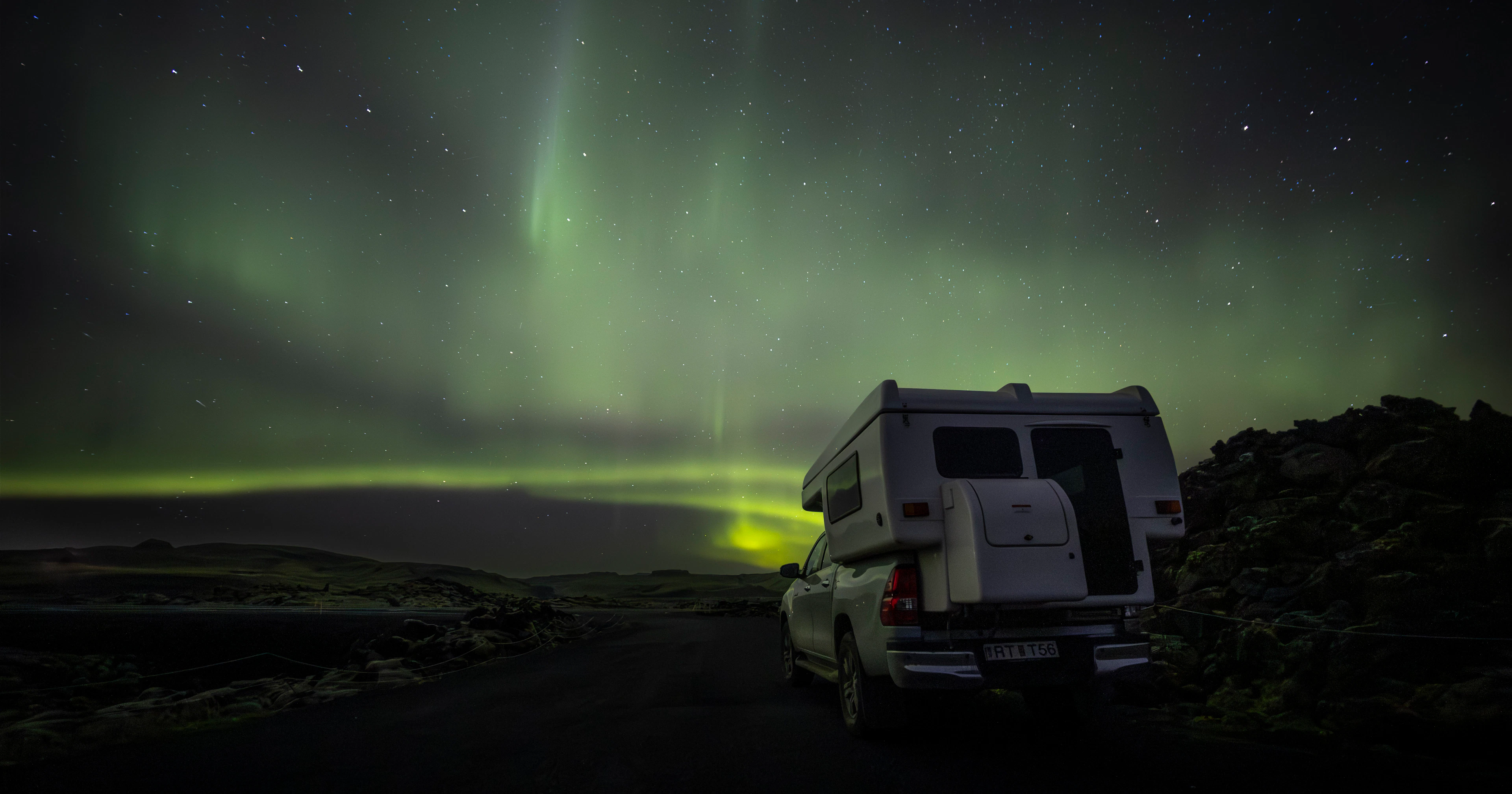
Aurora in Iceland
9 of September, 2026
September 9, 2026 | 34 min read | Written by Laura Posada
What is the Best Month to Visit Iceland? Local Guide.
Overview
TL;DR: There is no single best month to visit Iceland, only the best month for your trip. Pick July or August for F-roads, the highlands and camping. Pick September for the best all around trip, because the first three weeks are the only window where the northern lights and the mountain roads overlap. Pick May for the cheapest trip with long days, as long as you accept zero highland access. Pick February or March for ice caves, aurora, snowmobiling and skiing. Treat April as the gamble month, because it is sold as spring and it is not spring.
The best month to visit Iceland depends entirely on what you want to do here, and I say that as someone who moved to Iceland seven years ago and has now driven this country in all twelve months. July and August are the best months for F-roads and camping. September and May are the best months for value. February and March are the best months for ice caves and the northern lights. If you want one sentence, it is September, and I will show you exactly why. Though May is also an honorable mention.
I am not Icelandic. I chose this country, which means I still remember what it feels like to plan a trip here from the outside and get it wrong. My first winter I had expectations for booking things I could not physically reach. My first spring I assumed the highlands opened in May. They did not, and they will not for you either. I actually saw snow in May in Akureyri.

When is the best time to visit Iceland?
The best time to visit Iceland is June through August if you want full access to the entire country, and September or May if you want most of the country at a much lower price. Those two answers cover about 90 percent of the advice I give people when they plan to visit Iceland.
Here is what almost every guide gets wrong. People plan an Iceland trip around a season, so summer for the highlands and winter for the northern lights. But that is where September plays its part. It is the best of both worlds.
Most people's vacations are limited and kids are back in school, which makes trip planning in September more difficult.
Reykjavik sits between roughly 0 and 12 degrees Celsius (32 to 54 Fahrenheit) all year round. What actually changes month to month is daylight, wind and access. Those three decide what you can do.
I have been on both sides. I have been on the counter side, helping clients who missed a flight or an activity because of bad weather, and I have been the tourist who got stuck in a town for two days because of bad weather. That one was in the Westfjords, and March is a whirlwind of an adventure when it comes to unpredictable weather.
Most people assume that a seven-day trip will be the same itinerary and the same experience regardless of the season and the weather.
Tourists visiting in mid September drive the whole Ring Road and catch the aurora on three of those nights.
On the other hand, those who come in early April lose two days to an orange weather warning and get stuck in Vik for a day. Same car, same price, completely different trip.
What is the best month for each activity?
Choose your month by what you actually came to do, not by average temperature. This is the table I wish someone had put in front of me before my first trip:
- F-roads and the highlands: July, August. The only months when every mountain road is reliably open.
- Camping and campervans: June to August. Campsites open, nights light, roads dry.
- Best all around trip: September. Aurora plus some highland access plus lower prices.
- Quiet roads with Aurora: October. Around 11 percent fewer visitors than in September.
- The cheapest trip with long days: May. Shoulder pricing, nearly summer daylight, and no highlands.
- Northern lights: February, March, and October. The best combination of darkness, activity and clear sky. Pro tip: February and March can be tricky. Filled with storms and flight cancellations. It is a roulette really.
- Natural ice caves: November to March. The glacier has to be frozen solid for a cave to be safe. Enjoy skiing or snowboarding in Iceland's beautiful towns like Siglufjörður and Akureyri.
- Puffins on the cliffs: Mid May to mid August. Adults are ashore and nesting.
- Puffling release, Vestmannaeyjar: Late August into September. Chicks fledge after dark and the whole town helps.
- Whale watching in the north: May to September. Peak season in Husavik, Akureyri and Eyjafjordur. See our guide to the best places for whale watching in Iceland.
- Absolute lowest prices and fewest people: December, January. Quietest months of the year, and the shortest days.
- Midnight sun: Mid June. Around 21 hours of sun and it never gets fully dark.
Iceland month by month: weather, daylight and access
These are the numbers I use when someone asks me to sanity check their plan. Temperatures are the official Reykjavik averages from the Icelandic Met Office, and daylight is measured mid month in Reykjavik.
- January: Low / high 28 / 38 °F (-2 / 3 °C)
- Can feel like -20 °C in wind.
- Daylight 5h 24m.
- Aurora Dark, often cloudy.
- Highlands Closed. Crowds and price Quietest and cheapest month.
- February: Low / high 28 / 38 °F (-2 / 3 °C).
- Can feel like -10 to -20 °C in wind.
- Daylight 8h 38m.
- Aurora Strong.
- Highlands Closed.
- Crowds and price Cheap, but the glacier lagoon is busy.
- March: Low / high 29 / 40 °F (-2 / 4 °C).
- Can feel like -10 °C in wind.
- Daylight 11h 41m.
- Aurora Best of the year.
- Highlands Closed. Crowds and price Low season with usable days.
- April: Low / high 33 / 45 °F (1 / 7 °C).
- Can feel like -5 °C in wind.
- Daylight 15h 05m.
- Aurora can be strong, but visibility is based on the weather.
- Highlands Closed.
- Crowds and prices are cheap.
- Most volatile weather.
- May: Low / high 39 / 50 °F (4 / 10 °C).
- Daylight 18h 23m.
- Aurora None.
- Highlands Closed.
- Crowds and price Best value, genuinely quiet.
- June: Low / high 45 / 56 °F (7 / 13 °C).
- Daylight About 21h.
- Aurora None. Highlands Opening from around 1 June.
- Crowds and price Peak begins.
- The driest month.
- July: Low / high 48 / 59 °F (9 / 15 °C).
- Daylight About 19h 20m. Aurora None.
- The Highlands are mainly open.
- Crowds and price Peak season.
- Warmest month.
- August: Low / high 48 / 58 °F (9 / 14 °C).
- Daylight 16h 24m.
- Aurora, at the very end of the month.
- The Highlands are fully open.
- Crowds and price Peak season, priciest cars.
- September: Low / high 43 / 53 °F (6 / 12 °C).
- Daylight 13h 02m.
- Aurora, yes, from about the 10th.
- Highlands Closing from mid month.
- Crowds and price Busier than it used to be, prices fall.
- October: Low / high 36 / 46 °F (2 / 8 °C).
- Daylight 9h 49m.
- Aurora is very good.
- Highlands Closed.
- Crowds and price Quieter than September, good value.
- November: Low / high 31 / 41 °F (0 / 5 °C).
- Daylight 6h 30m.
- Aurora Clearest skies of the season.
- Highlands Closed.
- Crowds and price Low season until Christmas.
- December: Low / high 28 / 39 °F (-2 / 4 °C).
- Daylight 4h 11m.
- Aurora varies with the weakest activity.
- Highlands Closed.
- Crowds and price holidays spike hard.
- Wettest month.
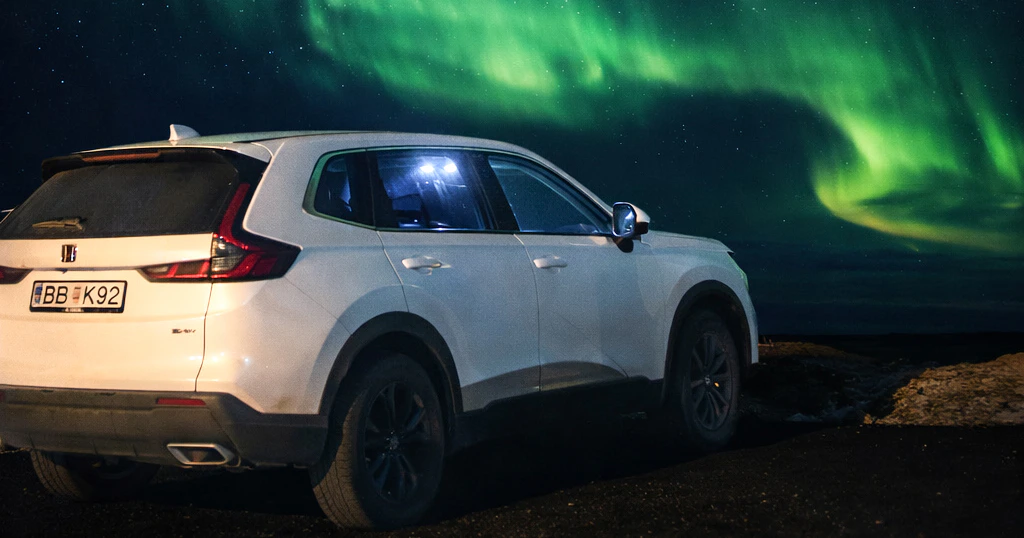
Three things in that table surprise almost everyone.
- February and March are the coldest and windiest months in Reykjavik, not January. On temperature it is marginal. On wind, February is the windiest month at every weather station in the country.
- December is the wettest month, at roughly 95 mm across about 15 wet days. The postcard version of a white Icelandic Christmas is not the average one.
- November has the clearest skies of the entire aurora season. Almost nobody books November for the lights, and on cloud cover alone it beats every other month between September and April.
If you want the fuller weather picture, our guide to the climates and seasons of Iceland goes deeper into why this island behaves the way it does.
Are July and August the best months for F-roads and camping?
Yes. July and August are the only two months when you can count on the F-roads and the highlands being open, and they sit in the middle of camping season. If the interior of Iceland is why you are coming, this is not really a choice.
These are also the only months when the whole of Iceland's Ring Road, Route 1 is comfortably drivable in a week, and the only real window for the best summer hikes in Iceland, including Landmannalaugar and Thorsmork.
When do the F-roads actually open?
F-roads open when the Icelandic Road Administration physically inspects the snow, the thawing ground and the river levels, which means the dates move every single year. These are the five year averages from their own published table:
- Kjalvegur, road 35: around 1 June, the earliest of the main highland routes.
- F208 north to Landmannalaugar: around 2 June, with an earliest recorded opening of 23 May.
- F225 Landmannaleid: around 16 June.
- F206 to Lakagigar: around 20 June.
- F26 Sprengisandur: around 6 July, one of the last to open.
- F210 Fjallabak South: around 7 July.
Read that list again and notice what is missing. There is no F-road that has ever averaged a May opening, and none has opened in April in the official five year record. If your itinerary has Landmannalaugar in it and your flights are in May, the itinerary is wrong, not the road.
Expert tip
a four-wheel-drive vehicle is required by law on every F-road, and taking a two-wheel-drive car onto one voids your insurance completely. Our 4x4 and SUV fleet is built for exactly this, and our Platinum Insurance is the only tier that covers F-road damage, including river crossings at a zero deductible. Read our complete guide to driving on the F-roads before you commit to a highland route.
One timing detail that catches summer drivers out: glacial rivers run highest in the middle of the day, because that is when the melt reaches the crossing. If you have a ford on your route, cross it in the morning rather than the afternoon.
What about camping and campervans?
Camper season at Lotus Car Rental runs from May until the end of September. We do not rent campervans through the winter, and that is a deliberate decision rather than a supply problem. In deep winter you get around four and a half hours of daylight, almost every campsite in the country is closed, and a high sided vehicle is the worst possible thing to be sitting in during an Icelandic windstorm.
All four of our campers are 4x4 and F-road approved, which matters if you want to sleep near the highlands rather than just drive past them.
Two rules worth knowing before you book:
- Overnight parking outside a registered campsite is illegal in Iceland. You cannot pull over at a scenic spot and sleep there.
- Almost no campsite is open year round. Of the sites on the national camping card, exactly one stays open all year. A handful of others, including Skaftafell and Thingvellir National Park, run reduced winter operations. Everything else is a summer business.
Pro tip
camping in May can be cold and the F-roads are not open. It is also important to check in advance which campsites are open. Since most campsites close in the winter and start reopening in May, Tjalda.is is a great resource for checking availability.
Our camping in Iceland guide covers the rules, and if you are weighing a camper against a car plus hotels, the campervan versus car rental comparison lays out the real numbers. For a full summer route, our best Iceland summer road trip itinerary is the one I hand people at the desk.

Why September is my pick for the best month
September is the best single month to visit Iceland because the first three weeks are the only window that gives you the northern lights and the mountain roads at the same time. Almost nobody plans for that overlap properly.
The overlap window is roughly 10 to 20 September
Here is the part it took me a few years to work out. Reykjavik sits at 64 degrees north, and true astronomical darkness does not exist here until early September. On 1 September there is none at all. By 10 September there are close to four hours of it, and by the end of the month more than seven. So the common claim that aurora season starts in late August is marketing rather than astronomy. Plan on the lights from about 10 September onward.
At the same time the highland roads are shutting. The official position from safetravel.is is that the F-roads usually close from mid September. In a mild year some of them hold on considerably longer, and Kjalvegur, F208 north and F206 are usually the last to go.
Put those two curves together and you get a window of roughly 10 to 20 September. That is the narrowest and best fortnight in the Icelandic calendar.
Expert tip that will save you a wasted drive
the Road Administration publishes F-road opening dates every spring, but it publishes no closing dates at all, for any highland road, in any year. Autumn closures happen live, driven by the first heavy snow. So any blog that tells you a specific F-road closes in mid October is inventing it. Check the live map at umferdin.is, the site many people still call road.is, on the morning of your drive, or call the 24-hour road line on 1777.
Why availability matters more than crowds
Crowds are here for many reasons, but frankly it falls within the summer holiday, when most people have the availability to travel and kids are not in school. That is on top of the F-roads being open.
On the other hand, if you have a long weekend or can wiggle some additional vacation days into September, you can do a lot more than you expect and with far fewer people around.
What is already closing in September
September is genuinely good, but be honest with yourself about what has ended:
- Adult puffins are gone. They leave the cliffs by mid to late August. Only the Vestmannaeyjar pufflings are still around, and that is a different experience entirely.
- Scheduled highland buses stop between early and late September depending on the operator, so from around the 20th there is no public transport into the interior at all.
- Landmannalaugar loses its hut warden, showers and camping. Those are summer only.
- Natural ice caves have not opened yet. If something is being sold to you as a September crystal ice cave, it is not a natural one. The Katla cave near Vik and the man-made Langjokull tunnel are the year round exceptions.
- Campsites and our campers finish at the end of the month. Plan a September camper trip in the first three weeks, not the last. A lot of the camping grounds stop maintenance, and some become impossible to book at all.
- The Grimsey ferry drops to three sailings a week from 1 October, so September is the last comfortable month for that day trip.
Expert tip on the moon, which nobody mentions
a full moon will wash out a weak aurora completely. Check the lunar calendar before you lock your September dates and aim for the new moon rather than the full one. It costs you nothing and it is the cheapest way there is to improve your odds.
One honest correction about September
September is not the quiet secret it was when I arrived. Official Icelandic figures put September ahead of both October and May for visitor numbers, and it now sits close to June. Travelers on the Iceland forums have started saying it out loud: the secret is out. So if your priority is genuinely empty roads rather than the aurora and highland overlap, read the next section before you book.
Is October the most underrated month?
October is quieter than September by a measurable margin, and it is the best month for travelers who want aurora chances on genuinely uncrowded roads. In October 2025 Iceland saw about 11 percent fewer foreign departures than in September, and hotel occupancy dropped from roughly 82 percent to 73 percent. That is a real difference you can feel at Reynisfjara, and if you have only seen photographs of it, our guide to the black sand beaches of Iceland explains why that one gets so busy.
What October gives you that September does not:
- Nearly nine hours of astronomical darkness per night by mid month, against about four in early September.
- Clearer skies. September is actually the cloudiest month of the whole aurora season in Reykjavik. October is measurably better.
- Low season car rental rates instead of tail-end shoulder pricing.
- Autumn color plus the first snow on the peaks, which is the best photographic combination of the year.
What October takes away: the highlands are gone, the campsites and campers are finished, and you have about nine and a half hours of daylight to work with instead of thirteen.
I want to correct one thing I hear repeated, though. October is not the quietest shoulder month. May is considerably quieter, by around 45,000 visitors, and February, March and April are all quieter than October too. October is the quiet month with aurora, which is a much narrower and more useful claim.
October is also the month I would spend on the places the tour buses skip, because you will actually have them to yourself. Our guide to Iceland off the beaten path and its hidden gems is built for exactly this kind of trip, and every one of those stops needs an Iceland rental car to reach.
Is May a better shoulder month than September?
May is the cheaper and emptier shoulder month, and September is the more capable one. Which is better depends entirely on whether you need darkness and highland access, because May gives you neither.
May is genuinely excellent value. It has around 18 hours of daylight by mid month, it is the second driest month of the year, rural hotels and campsites are reopening, and it is the one month where every Icelandic source I trust agrees a two-wheel-drive car is workable if you stay on the paved routes.
What May gives you:
- Surprisingly great weather. You could end up in a sun dress without expecting it. There is a surprisingly sunny week in May which brings back the life after darkness and a lack of Vitamin D.
- Whale watching. The best whale watching I have seen has been twice in May. Our guide to the best places for whale watching in Iceland covers where to go.
- Flexibility driving the Ring Road. It is much more doable to drive the Ring Road in May. There are some areas that can be closed due to snow banks, but it is quite rare.
What May does not give you:
- No northern lights. There is no usable darkness in Reykjavik from around the start of May. Aurora operators here run roughly 1 September to 15 April, which tells you everything you need to know.
- No highlands or F-roads. As above, not one of them averages a May opening.
- No natural ice caves. They flood with meltwater.
- Less green than you are picturing. There is still snow in the Westfjords in mid May, and the famous lupines are not really going until June.
Expert tip, and here is where I correct the internet
you will read everywhere that May is milder than June. It is not. Reykjavik averages about 6.7 °C in May against roughly 9.8 °C in June, June is the driest month of the entire year, and June is less windy. May is cheaper and quieter than June. It is not warmer. Pack accordingly, and skip the umbrella, because the wind here will destroy it within the hour.
What is the best month to see the northern lights in Iceland?
The best months to see the northern lights in Iceland are September, February, March and October, because they score well on all three things the aurora actually requires. The season runs from roughly 1 September to 15 April, but the months at either end of it outperform the dark middle, which is the opposite of what most people assume.
Seeing the aurora needs three things at once, and no month in the Icelandic calendar wins all three:
- Darkness peaks in December, at close to 13 hours of astronomical night. It falls to about four hours in September and under one hour by mid April.
- Geomagnetic activity peaks around the equinoxes, in March and September, and bottoms out in December. September and March between them account for a very disproportionate share of the strongest storms on record. December accounts for barely any.
- Clear skies peak in November, followed by December and October. September is the cloudiest month of the aurora season.
Line those up and the picture is clear. December is the trap: maximum darkness, minimum activity, and it is the month people book most. April is the mirror trap: good activity and nearly clear skies, but the darkness has gone, with the last night of real astronomical darkness in Reykjavik falling around 9 April. September and March score respectably on all three at once, February is the close runner up, and October is the best autumn option.
Pro tip that contradicts common advice
you do not need to drive north for clearer skies. Akureyri records zero hours of sunshine in an average December. The genuinely clearer region is the southeast, around Hofn and the glacier lagoon. That is also where the ice caves are, which makes a southeast winter trip the most efficient aurora plan we have.
Be skeptical of aurora success rates
You will see percentages quoted for aurora tours. I have never found an Icelandic operator that publishes a real numeric success rate, a sighting log, or an outcome calendar. What they publish instead is a free retry policy, and that tells you what you need to know: the industry prices in a substantial per night failure rate and simply does not name it.
Real traveler reports across a winter range from seven nights out of seven to zero nights out of ten in the same month. Give yourself five to seven nights and expect a third to half of them to be unusable. Book your first aurora attempt on your first night so you have retries left.
The most important thing I can tell you is that a high Kp number with no gap in the cloud is worthless. A rental car in Iceland is the real aurora tool here, because it lets you drive to the hole in the sky. Check the cloud cover forecast on vedur.is, the official Icelandic Met Office, before you commit to a night, and read our northern lights guide for the viewing spots.
Iceland is also one of the darkest countries in Europe once you leave the towns, which is worth knowing even on nights when the aurora refuses to show. We covered it in our roundup of Europe's top stargazing hotspots.
What is the best month for ice caves?
The best months for natural ice caves in Iceland are November through March, with February often the strongest single month. The glacier has to be frozen hard for a cave to be structurally safe, which is why the season is a winter one and why it cannot be booked in summer.
February works well for a specific reason: it has meaningfully more days that stay below freezing all day than March does, and it offers around 8.6 hours of daylight against December's 4.2. Blue ice needs light coming through meters of ice above you, so those extra daylight hours change the photographs completely.
Expert tip no tour page will give you
in a mild winter the good natural ice cave might not exist at all. A guide with more than a decade on Vatnajokull described the 2025 to 2026 season as close to the second time in thirteen years with no reliably good accessible cave, and travelers came home with photographs of ice walls and no ceiling. In March 2016 one operator cancelled the remainder of its season outright for collapse risk after an unseasonably warm spell. If a natural ice cave is the whole reason for your trip, build a backup into the plan. The Katla ice cave near Vik and the man-made Langjokull tunnel run year round and do not depend on a cold snap.
Ice caves are always guided, without exception, and your guide will re-inspect the entrance after rain. Do not go looking for one on your own.
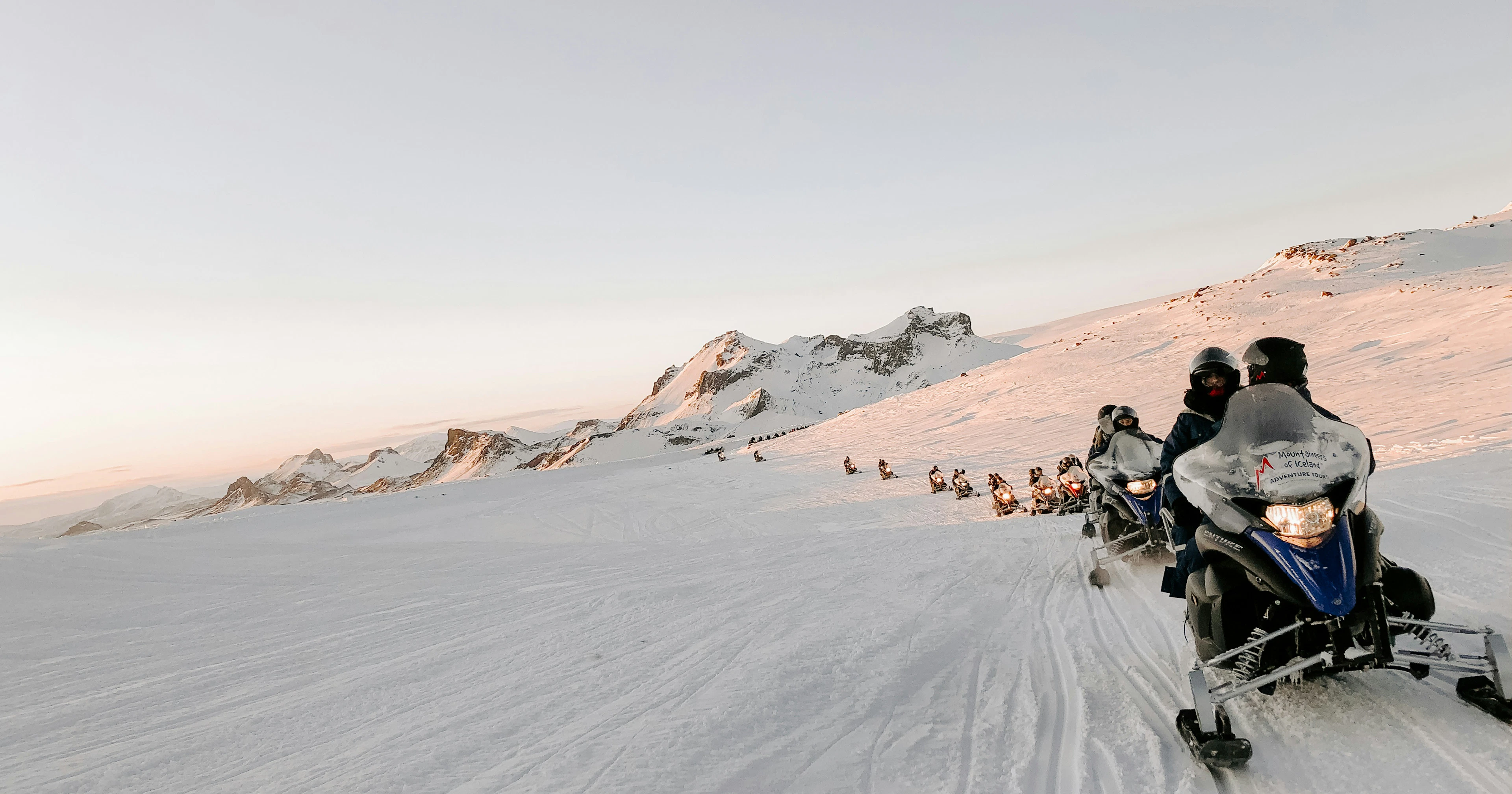
What a winter self-drive trip is actually like
A winter self-drive trip in Iceland works, but it works on a much smaller map than the one you are looking at. This is the section I wish more people read before booking, because the gap between a winter itinerary and a winter reality is where trips get ruined.
Some facts that reframe the whole thing:
- Only about 5,000 of Iceland's 12,000 km of road gets any winter service at all. The rest is not cleared. Service runs on a lettered system from seven days a week down to twice a week.
- Road conditions are recorded from 07:00 a.m. to 10:00 p.m. (22:00) between 1 October and 30 April. For nine hours of every winter night, a road showing as clear has simply not been rechecked.
- Roads are not cleared down to asphalt. Plows compact the snow, which leaves a hard icy surface. The Road Administration says plainly that icy roads cannot be fully prevented at any level of funding.
- In late December 2024, a Reykjavik resident tracked it day by day and found some part of Route 1 closed by weather every single day from around the 20th to the 28th. Not one closure. Every day.
- On 9 January 2026 around 200 travelers were assisted in a single day after a storm hit Route 1 between Jokulsarlon and Skaftafell, with about 25 volunteers from Iceland's search and rescue teams involved.
- January 2024 was the deadliest month for road deaths in recorded Icelandic history, with six. Over a recent five year period, 77 percent of Iceland's road deaths happened outside urban areas.
Now the practical version, drawn from what travelers actually report:
- December to February, the Ring Road does not happen. Look at winter trip reports and the east and northeast simply vanish from itineraries. The realistic self-drive radius from Reykjavik in deep winter is Vik to the east and Borgarnes to the north. People who complete a winter Ring Road are giving it 12 to 15 days, not seven.
- March is itinerary erosion rather than cancellation. Expect to lose one or two days and one to three bookings. Wind is named as the deal breaker by almost every March reporter, with sustained speeds of 40 to 60 mph reported at Vik.
- The pattern in January is streaks. Cancellations come in runs of consecutive days, and notice often arrives at lunchtime for that evening.
- The most common regret is non-refundable hotels. Travelers repeatedly describe turning back not because the road was closed but because a booking down the line could not be moved. Book your flights, then hold your accommodation until a couple of weeks out.
- Every experienced winter driver I have met here revised their opinion. Reporters from Chicago, Boston, Michigan and Quebec either changed their plan or switched to guided tours. Ice on a lava field in a crosswind is not the same problem as snow on a highway. Our general guide to driving in Iceland is the place to start.
The way to make a winter trip work is to base yourself and drive out and back rather than trying to move every night. Our list of the best day trips in Iceland from Reykjavik is essentially a winter itinerary, because every one of them puts you back in a warm bed the same evening.
Three expert tips that only locals tend to know
First, drive west rather than east in winter where your route allows a choice, because it buys you over 40 minutes of usable daylight. Second, bring or buy ice crampons. The most repeated winter regret is not about roads at all, it is car parks and viewing platforms, and the lower platform at Gullfoss ices over from freezing spray. Third, use the Travel Plan on safetravel.is. If you register a trip and do not check in within two hours of your stated return time, rescue teams begin looking for you.
If you want a winter trip built around what is actually achievable, use our best Iceland winter road trip itinerary and our winter driving guide.
What closes outside Reykjavik in the winter?
This is the part that quietly shrinks a winter trip. Reykjavik stays open. The countryside does not.
- Regional museums are the biggest loss. Many East Iceland museums run June to August only, and Glaumbaer in Skagafjordur drops to appointment only from late October to the end of March.
- Whale watching narrows. In Husavik the season runs roughly March to the end of November with one operator and April to the end of November with the other, so December to February has nothing in the north. Reykjavik whale watching runs year round, and interestingly reports a slightly higher winter success rate than summer.
- Ferries thin out. The Grimsey ferry drops to three sailings a week from 1 October to mid May.
- Ski areas are unpredictable rather than closed. No Icelandic ski area publishes committed season dates, and recent seasons have ranged from 31 open days to 85.
- Swimming pools mostly stay open, which corrects a common assumption. Most cut their hours instead of closing, and the remote outdoor pools are the best thing about an Icelandic winter.
What is the cheapest month to visit Iceland?
The cheapest and quietest months to visit Iceland are December and January, followed by February and March. Rental cars, hotels and flights all bottom out in deep winter, and what you pay for it is daylight.
Rental pricing here follows demand very predictably. Using a seven day rental as the benchmark, the shape of the year looks like this:
- January to March: the floor of the year for car rental.
- April and May: still shoulder pricing, with daylight climbing fast.
- June: peak begins, roughly 25 percent above May.
- July and August: the most expensive months of the year.
- September: prices fall away from peak while the weather is still workable.
- October and November: back to genuine low season rates.
- Late December: the holidays spike hard, on cars and on rooms.
May sits in the most interesting spot on that list. It is around 20 percent cheaper than June for a car while giving you almost the same daylight, and official accommodation statistics show hotel nights jumping about 24 percent from May to June against a flat number of rooms. That is the clearest value gap in the calendar.
For the full cost picture, our guide to traveling Iceland on a budget breaks down food, fuel, hotels and activities, and you can compare live rates any time on the Iceland car rental page.
Two more things that shape what a trip costs whichever month you pick. First, read our complete guide to currency in Iceland, because this is a card country and travelers still arrive with cash they will not use. Second, check how the 2026 road tax affects rental cars in Iceland, since it is charged per kilometer and a Ring Road trip racks up a lot more of them than a Golden Circle trip.
What is the worst time to visit Iceland?
April is the riskiest month to visit Iceland, not because the weather is worst but because the gap between what April is sold as and what April delivers is the widest in the calendar. It is marketed as spring. It is not spring.
Here is what April actually is:
- No highland access whatsoever. No F-road has opened in April in the official five year record.
- The aurora ends mid month. The last night with real astronomical darkness in Reykjavik falls around 9 April. Before that date you have a genuine chance. After it, effectively none.
- Natural ice caves are finishing or finished.
- Studded tires come off in mid April, while spring snowstorms can still reach Reykjavik.
- Campsites are pre-season and the ground is mud.
April also has the widest spread in outcomes of any month I know. One traveler reported 4 to 9 April with rain every day, orange warnings, and four separate tours cancelled including the rescheduled one. Another reported 3 April with a Kp of 6.7 and the lights overhead on two consecutive nights. Late April reports include a week of clear sun and sunburn, and a week of unbroken cloud. It is a coin flip, and you should book it knowing that.
The honest counterweight comes from a traveler with ten Iceland trips behind them, who noted that on every single one of those ten, at least one planned thing had to be scrapped for weather. That is not April. That is Iceland.
Two other warnings, which are less about a bad month and more about a bad plan:
- Do not attempt the Ring Road in one week between December and February. Give it 12 to 15 days or shorten the route.
- Do not plan a camper trip outside May to September. We do not rent them in winter, and the reasons are daylight, closed campsites and wind.
Icelandic holidays and festivals month by month
Timing your trip around an Icelandic festival is the fastest way to see this country as we actually live in it rather than as a landscape. Most of these are not tourist events, which is exactly why they are worth it.
Winter and early spring
- Threttandinn, 6 January. The thirteenth day of Christmas, marked with bonfires, fireworks and elf songs. The last Yule Lad goes back to the mountains and the trees come down.
- Thorrablot season, late January into February. Midwinter feasts held by villages and community associations, with fermented shark and a great deal of singing. If you get invited to one, go.
- Bolludagur, Sprengidagur and Oskudagur, February. Three days in a row of cream buns, then salted lamb with pea soup, then children in costume singing shops for sweets. They move with Lent each year.
- Winter Lights Festival, Reykjavik, early February. Four days of light installations and late museum openings in the darkest part of the year.
- Beer Day, 1 March. Iceland's beer ban was only lifted in 1989, and the anniversary is taken seriously.
Spring and summer
- Aldrei For Eg Sudur, Isafjordur, Easter weekend. A free rock festival in a Westfjords fishing town. One of the best things in the Icelandic calendar and almost entirely unknown to visitors.
- Sumardagurinn fyrsti, the first Thursday after 18 April. The First Day of Summer, a public holiday that is frequently colder than the days around it. We know. We celebrate anyway.
- The Donald Duck Games, Hlidarfjall, the last week of April. A children's ski competition in Akureyri with around a thousand kids taking part, and the unofficial close of the ski season.
- Sjomannadagurinn, the first Sunday of June. Seamen's Day, enormous in the fishing towns and barely visible in central Reykjavik. Drive to a harbor town for this one.
- National Day, 17 June. Iceland's independence day, with parades and a woman dressed as the Lady of the Mountain.
- Thjodhatid, Vestmannaeyjar, the first weekend of August. Around 15,000 people descend on an island of just over 4,000 for a festival running since 1916. A bonfire on Friday, fireworks at midnight on Saturday, and on Sunday evening the entire valley sings together while red flares burn on the cliffs. Book the ferry or the flight far ahead, because both sell out.
- Culture Night, Reykjavik, a Saturday in late August. The whole city center becomes the venue, every event is free, and it shares its date with the Reykjavik Marathon.
Autumn and the puffling patrol
- The puffling patrol, Vestmannaeyjar, late August into September. This is my favorite thing in the Icelandic year. Puffin chicks fledge after dark and some get confused by the town lights, so families go out with flashlights and cardboard boxes, collect the lost ones, and release them to the sea the next day. Rescued chicks are weighed, measured and ringed at Saeheimar first, and the underweight ones go to a rehabilitation center for a few days. There are no fixed dates because it depends on the year, but it usually starts in the last week of August and runs four to five weeks. Visitors are genuinely welcome to help.
- Rettir, September into early October. The sheep round-up, when the flocks come down off the mountains and get sorted by family into a wooden corral. Spectators are welcome and you can help catch and sort, but this is a working day and one of the busiest of the rural year. Watch first, join when invited. Each municipality publishes its dates before 20 August.
- Reykjavik International Film Festival, late September into early October. Around eleven days and eighty features.
- Iceland Airwaves, early November. Downtown Reykjavik turns into a music festival in the exact month most visitors write off.
Christmas and New Year
- The Yule Lads, 12 to 24 December. Thirteen brothers, one per night, and children leave a shoe in the window. The first arrives on the night of 11 to 12 December.
- New Year's Eve. There is no official municipal fireworks display in Reykjavik. Instead there are neighborhood bonfires lit around 20:30, then the entire nation stops to watch a satirical television review at about 22:30, and from 23:30 the sky goes completely mad with private fireworks. Most of those fireworks are sold by Iceland's volunteer search and rescue teams as their main annual fundraiser. So the noise is also the budget that comes to find you if you get stuck on a mountain road. I have never managed to find that anything but moving.
Expert tip on festival planning
ignore any listing that still promotes Secret Solstice. It has not run since 2019 and the original organizer was liquidated, but old roundups keep it alive online and people still plan trips around it. If you want the solstice, take a midnight sun hike instead. Also plan around Easter, which gives Iceland five consecutive days off, and note that Good Friday is the strictest closure day in the calendar.
For more on how we actually behave here, from tipping to swimming pool etiquette, our guide to Icelandic culture and traditions is a good primer.
What car do you need in each season?
Your month decides your car more than your budget does. Iceland does not have a season where any car works everywhere, so match the vehicle to the calendar:
- May to September, paved routes only: a small automatic like the Toyota Yaris is enough, and it is the cheapest way to drive Iceland's Golden Circle and the South Coast.
- June to September, Ring Road: a comfortable SUV such as the Toyota RAV4 4x4, or compare the full 4x4 and SUV range.
- July and August, F-roads and highlands: a capable 4x4, from the Dacia Duster at the value end up to the Land Rover Defender or Toyota Land Cruiser 250 for the harder routes.
- May to the end of September, camping: a Duster with a roof tent or a RAV4 with a roof tent for two, or the VW California or Hilux Camper for four. We do not rent campers in winter.
- October to April, anywhere outside Reykjavik: four-wheel-drive, every time. Not because the pavement demands it, but because the wind, the ice and the closures do.
If you want that decision made for you month by month and route by route, our guide to the best car to rent in Iceland breaks it down properly, and our list of the top 7 rental cars made for Iceland roads is the short version. Thinking about an EV instead? Read renting an electric car in Iceland first, because charger spacing changes what months and routes make sense. And before you book anything, our 9 essential Iceland car rental tips will save you money in any season.
What does a rental car cost by season?
These are current Lotus prices with insurance included, so you can see what your chosen month actually costs you:
- Seven days, Toyota RAV4 4x4, low season: around $635 for the week.
- Seven days, Toyota RAV4 4x4, peak summer: around $1,785 for the same car.
- Three days, small automatic: around $390 to $465 depending on season.
- Five days, compact SUV: around $776 to $1,078 depending on season.
- Seven days, campervan: around $2,098, which covers your accommodation as well.
That RAV4 gap between low season and peak summer is roughly $1,150 for an identical car. It is the single strongest financial argument for a shoulder month.
Four things about winter driving that cost people real money
Studded tires are legal in Iceland from 1 November to 14 April. The law is written as a prohibition on the rest of the year rather than a permission for those months, which is why so many blogs get the dates wrong. You will read that the window is 15 November to 15 April, or that winter tires are legally mandatory by type. Both are wrong. What the law does require in that same period is a minimum tread depth of 3.0 mm.
Hold on to your car door. This is the most expensive lesson in Iceland and the one I give most often. A gust catching an open door will bend it past its hinge, and door damage is excluded from standard collision cover. One documented charge here was 350,000 ISK, roughly $2,500. Gusts near mountains run far higher than the forecast average, so a forecast in the twenties can mean something much worse in the wrong spot. Park facing into the wind and open the door with your body braced against it.
Sand and ash are not just a spring problem. Roughly half of South Iceland's dust events happen in winter or near-freezing conditions. The source areas are the black sand plains, above all Myrdalssandur and Skeidararsandur on the South Coast, which is the route almost every visitor drives.
Watch for sheep in September and October. Free roaming is the legal default here, so if you hit a sheep, the fact that it was not fenced in is not a defense. The second gathering has to be finished by 15 October, and until then they are on the roads.
Expert tip
our Platinum Insurance is the most complete coverage available in Iceland and the only tier that covers F-road damage, river crossings at a zero deductible, gravel, wind gusts and ash. If you are visiting between October and April, or going anywhere near the highlands in summer, this is the one thing I would not economize on. The full detail is in our rental car insurance guide.
Two more practical notes. There are 26 single-lane bridges on Route 1, and the rule is simply that whoever arrives first has priority, which is much harder to judge in the dark. And on the eastern Ring Road, plan your fuel: the stretch from Myvatn to Egilsstadir runs about 113 km with no fuel or services at all, and locals will tell you never to drop below half a tank between Hofn and Akureyri.
Before any drive, check road conditions on the live map at road.is, the weather on vedur.is and the safety alerts on safetravel.is. Check them the morning of your drive, not the night before. If a road is marked closed, it is closed, and no vehicle changes that.
Frequently Asked Questions
When is the best time to visit Iceland?
The best time to visit Iceland is June through August for full access to the whole country including the highlands, or September and May for the best balance of price, daylight and weather. September is the strongest single month overall because its first three weeks are the only period offering the northern lights and open mountain roads at the same time.
What is the best month to visit Iceland?
September is the best month to visit Iceland for most travelers. Roughly 10 to 20 September gives you real astronomical darkness for the aurora while several highland roads are still open, prices have dropped from peak summer, and tours, rooms and cars have not sold out. July is the best month if the highlands and camping are your priority.
What is the best month to see the northern lights in Iceland?
September, February, March and October are the best months to see the northern lights in Iceland. Seeing the aurora needs darkness, geomagnetic activity and clear skies at the same time, and those three peak in different months. December has the most darkness but the weakest activity, and September and March score best on geomagnetic activity while October offers the best balance in autumn.
What is the worst time to visit Iceland?
April is the riskiest month to visit Iceland, because it is sold as spring and delivers neither winter nor summer. No F-road has opened in April in the official five year record, natural ice caves are finishing, studded tires come off the rental fleet mid month, and real astronomical darkness for the aurora ends around 9 April. Outcomes in April vary more widely than in any other month.
Is October the best time to visit Iceland?
October is the best month for travelers who want aurora chances on genuinely quiet roads. Iceland saw around 11 percent fewer foreign visitors in October 2025 than in September, hotel occupancy dropped by about nine points, and October has clearer skies and far more darkness than September. The trade is no highland access and about nine and a half hours of daylight.
What are the best months to visit Iceland for a first trip?
June through August are the best months for a first trip to Iceland, because every road is open, the days are long enough to absorb delays, and nothing has to be cut from the itinerary for weather. If cost matters more than complete access, May or September will give you most of the same trip for meaningfully less money.
Is May cheaper than June in Iceland?
Yes, May is around 20 percent cheaper than June for car rental, and official statistics show hotel nights rising about 24 percent from May to June, so accommodation is easier to find too. May is not warmer than June, though: Reykjavik averages about 6.7 °C in May against roughly 9.8 °C in June, and June is both the driest and the calmer month.
Can you drive the Ring Road in winter?
You can drive Iceland's Ring Road in winter, but it needs 12 to 15 days rather than the seven that work in summer, and it may not be possible at all in a bad week. Only about 5,000 of Iceland's 12,000 km of road receives any winter service, and in late December 2024 some part of Route 1 was closed by weather on every single day for over a week. In deep winter the realistic self-drive radius from Reykjavik is Vik to the east and Borgarnes to the north.
How many days do you need in Iceland?
Most travelers need five to seven days in Iceland, and seven is the sweet spot because it covers the entire Ring Road at a comfortable pace. In deep winter that same route needs 12 to 15 days to be realistic. Our guide to how many days you need in Iceland breaks it down by trip type.

My honest verdict after seven years
If you asked me over coffee, I would say this. Come in July if you want the highlands, because there is no substitute and no workaround. Come in September if you want the best single version of Iceland, and aim at the 10th to the 20th. Come in October if you want the aurora without the traffic. Come in May if budget decides it and long days matter more than darkness. Come in February or March if you came for ice caves and the northern lights, and give yourself more days than you think you need.
And if you are booking April, book it knowing it is a gamble. I would rather tell you that now than have you find out at Vik in the rain.
The reason I still like this job after seven years is that the answer genuinely changes from person to person. Iceland is not one destination with one best month. It is twelve fairly different countries wearing the same name, and the whole trick is picking the one you actually came for. If you are curious what it is like to stay for all twelve of them rather than visit, we wrote honestly about the pros and cons of living in Iceland.
Ready to pick your month? Book your rental car with Lotus Car Rental and we will make sure you have the right vehicle for whichever version of Iceland you are coming to see. Rent for your whole trip to lock in the best daily rate, and if you are not sure what you need, call us. We pick up the phone, and we drive these roads ourselves.
